

Applying to Overseas Schools - What's the Difference?
If you've spent your teaching career in China, you may be surprised to discover that applying for international schools overseas can feel quite different.
The good news? Different doesn't mean more difficult - it simply means understanding a new process and knowing what to expect.
Things often move more slowly

One of the biggest differences is the pace.
In China, thanks to WeChat, it's not unusual for schools to contact candidates within hours or a few days of receiving an application. Interviews, demo lessons, and even offers can happen very quickly.
Overseas schools often work to longer recruitment timelines. It may take several weeks to hear back after applying, especially if schools are reviewing applications in batches or waiting until a closing date has passed. A slower response doesn't necessarily mean you're no longer being considered. They’re just working on a different timeline.
Every school has its own application process

Unlike the straightforward CV-and-WeChat approach many teachers are familiar with in China, overseas schools often have more structured recruitment processes.
You may be asked to:
● Complete an online application portal.
● Upload supporting documents such as qualifications, references, or safeguarding certificates.
● Answer written application questions or submit a personal statement.
● Attend multiple interview stages.
● Complete background or safeguarding checks before an offer is finalised.
Each school is different, so knowing and understanding the application instructions carefully is essential.
Be prepared for different technology

Communication may also look different.
Rather than WeChat, schools may contact you by email or schedule interviews through platforms such as Zoom, Microsoft Teams, or Google Meet. Make sure you check your inbox (including your spam folder), respond professionally, and test your technology before interviews.
And if you’re based in China currently, you may need a VPN to access some online platforms.
Time zones can affect communication

If you're applying while living in China, remember that schools and HRs in Europe, the Middle East, or the Americas may reply outside your normal working hours. Being flexible with interview scheduling can help. You might have to schedule an interview time very late at night or early in the morning.
Keep an open mind

Even within China, recruitment practices vary. With WeChat being so fast-paced and immediate, it can feel a little strange switching to email communication and not receiving updates for many
days. But, if you’re open-minded, patient, and prepared, it’s really nothing to worry about!
The most successful candidates are those who stay flexible, remain professional, and adapt to different expectations.
Our advice
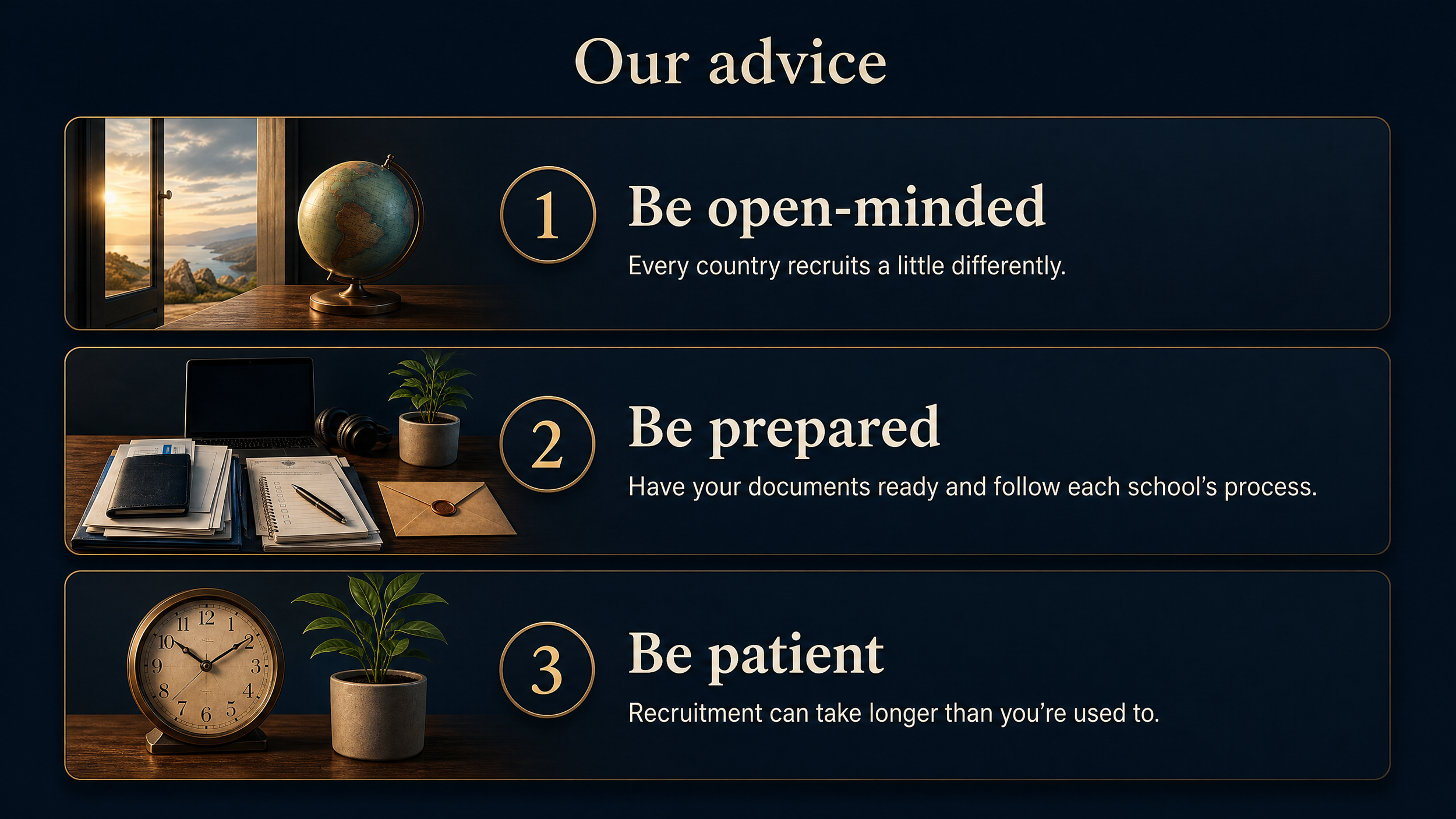
If you're applying overseas for the first time, remember these three things:
Be open-minded. Every country recruits a little differently.
Be prepared. Have your documents ready, familiarise yourself with different interview platforms, and carefully follow each school's application process.
Be patient. Recruitment can take longer than you're used to, but that doesn't mean opportunities aren't progressing behind the scenes.