

WHAT SHOULD I DO IN A DEMO LESSON?
If you've been invited to deliver a demo lesson at a prospective school, congratulations! This is a promising step in the hiring process. A demo lesson can feel both exciting and nerve-wracking - here's how to prepare and shine on the day.
1. Know What A School Is Looking For
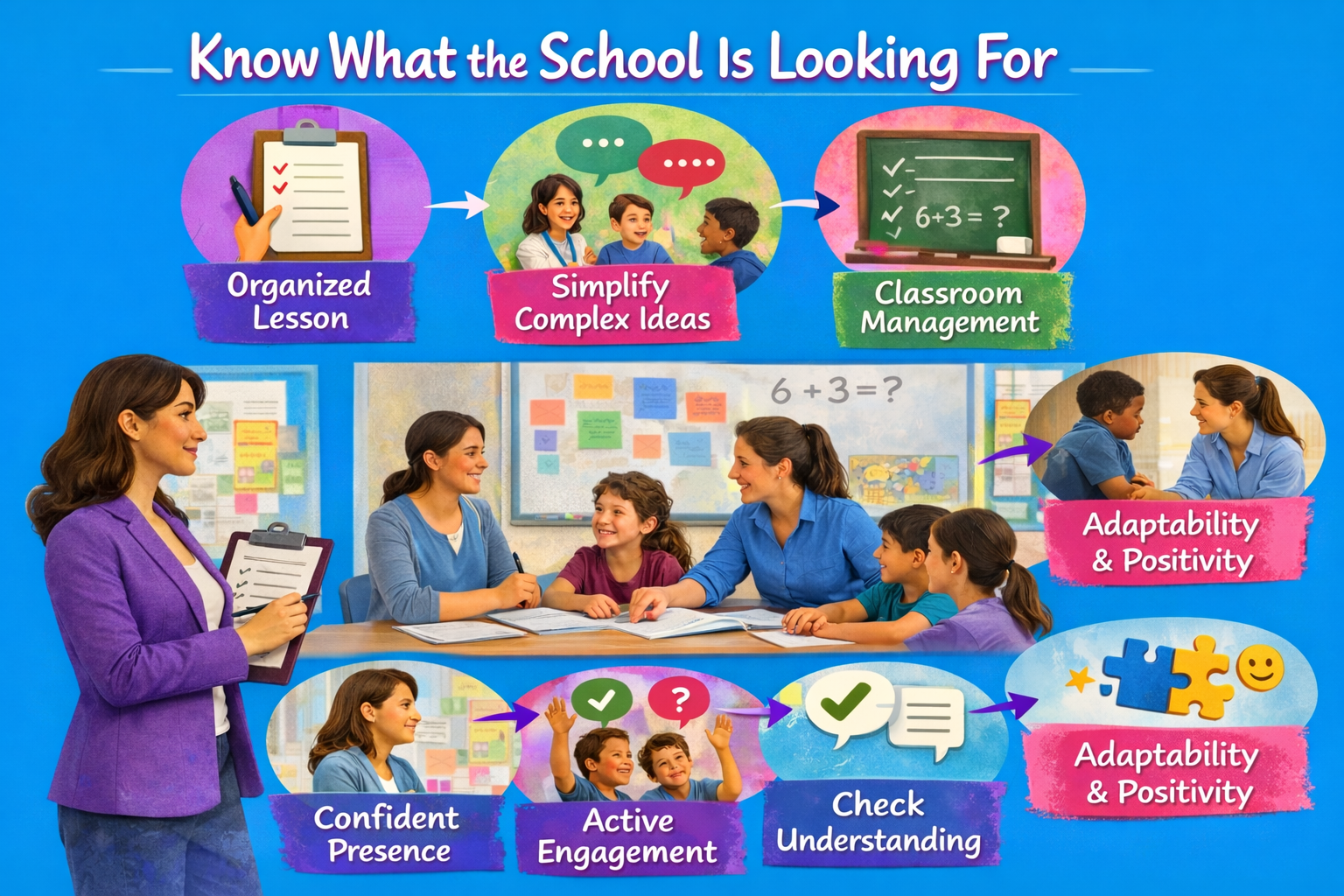
The demo lesson is your opportunity to demonstrate how you shine as an educator in a classroom setting. Principals and observers will look for:
Clear planning and organisation
The ability to simplify complex ideas
Confident, calm classroom presence
Active student engagement
Ongoing checks for understanding
Adaptability when students struggle
Positive classroom management
Knowing exactly what you need to be demonstrating will help keep your demo on track!
2. Clarify the Key Details
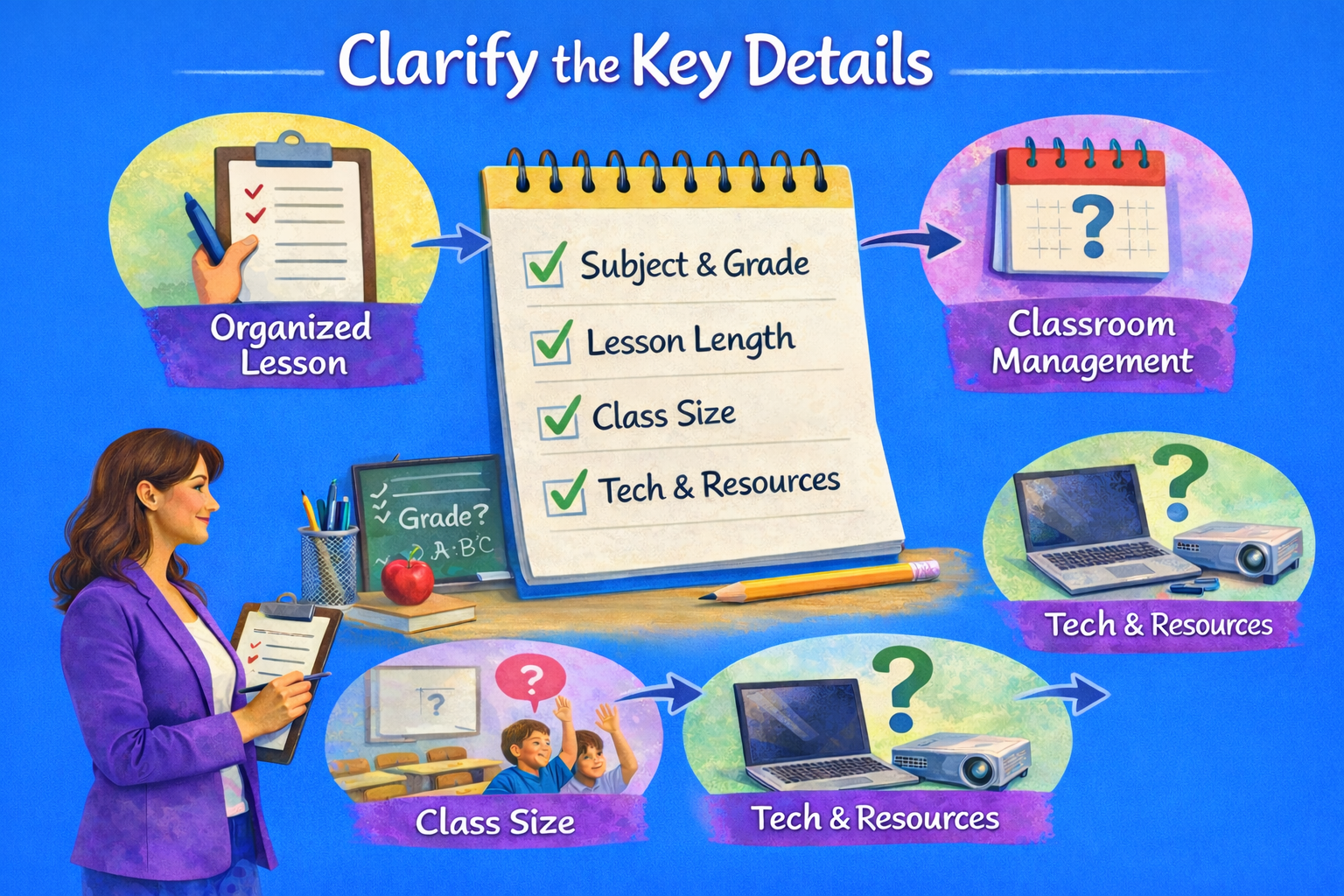
Before planning your demo lesson, confirm:
Subject and grade level
Lesson length
Class size
Available technology and resources
If you're unsure, ask! It shows professionalism and helps you prepare effectively.
3. Plan a Focused, Student-Centred Lesson
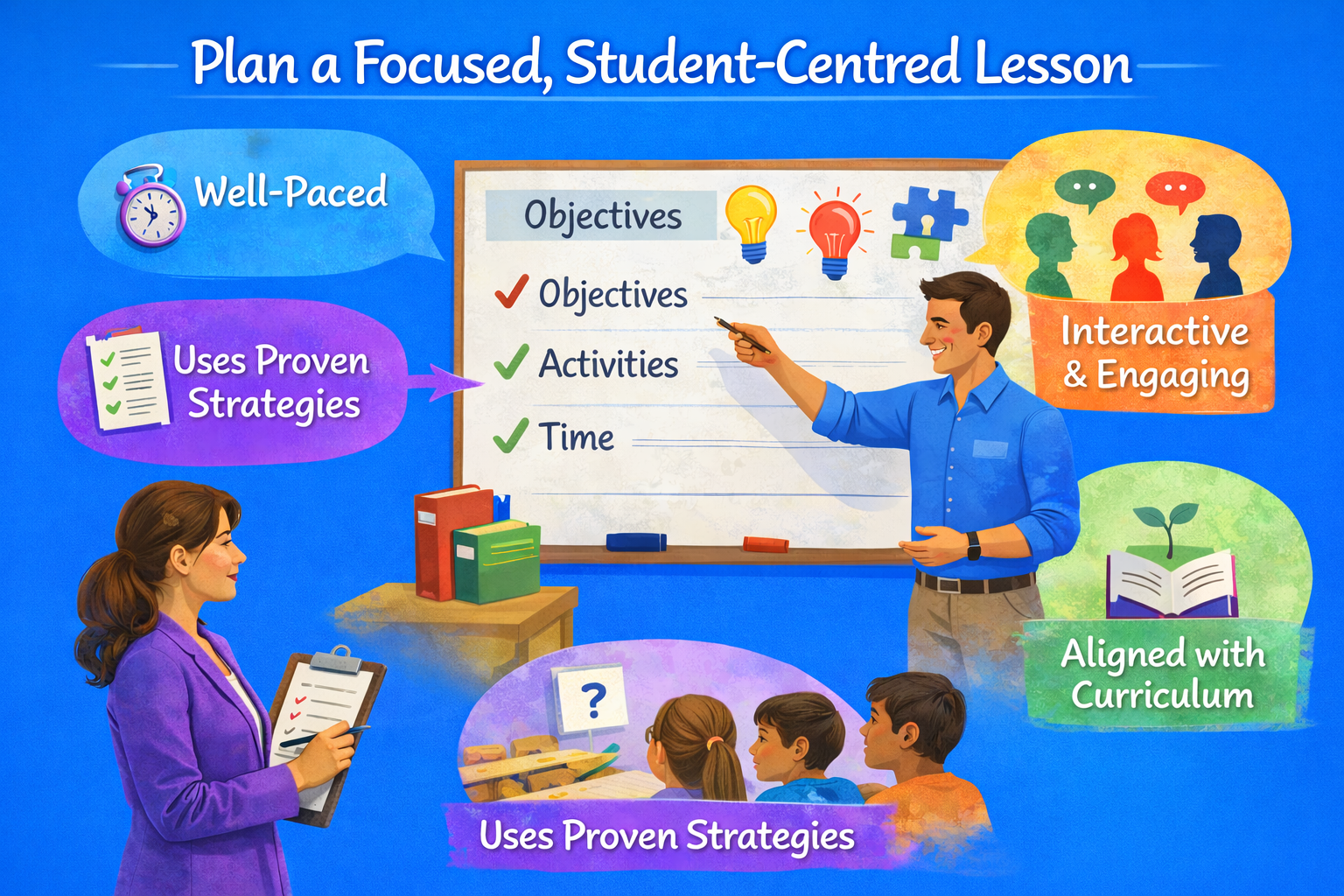
When planning the content of your demo, keep your lesson:
Well-paced and achievable in the time
Based on strategies you've previously used successfully
Interactive, with opportunities for students to speak, solve, or create
Aligned with the school’s curriculum approach, if known
A demo class isn’t the time to try something new, or wing it! When planning, play it safe and think about activities you’ve successfully led before. This will also help you to feel more secure and confident.
4. Practice and Reflect
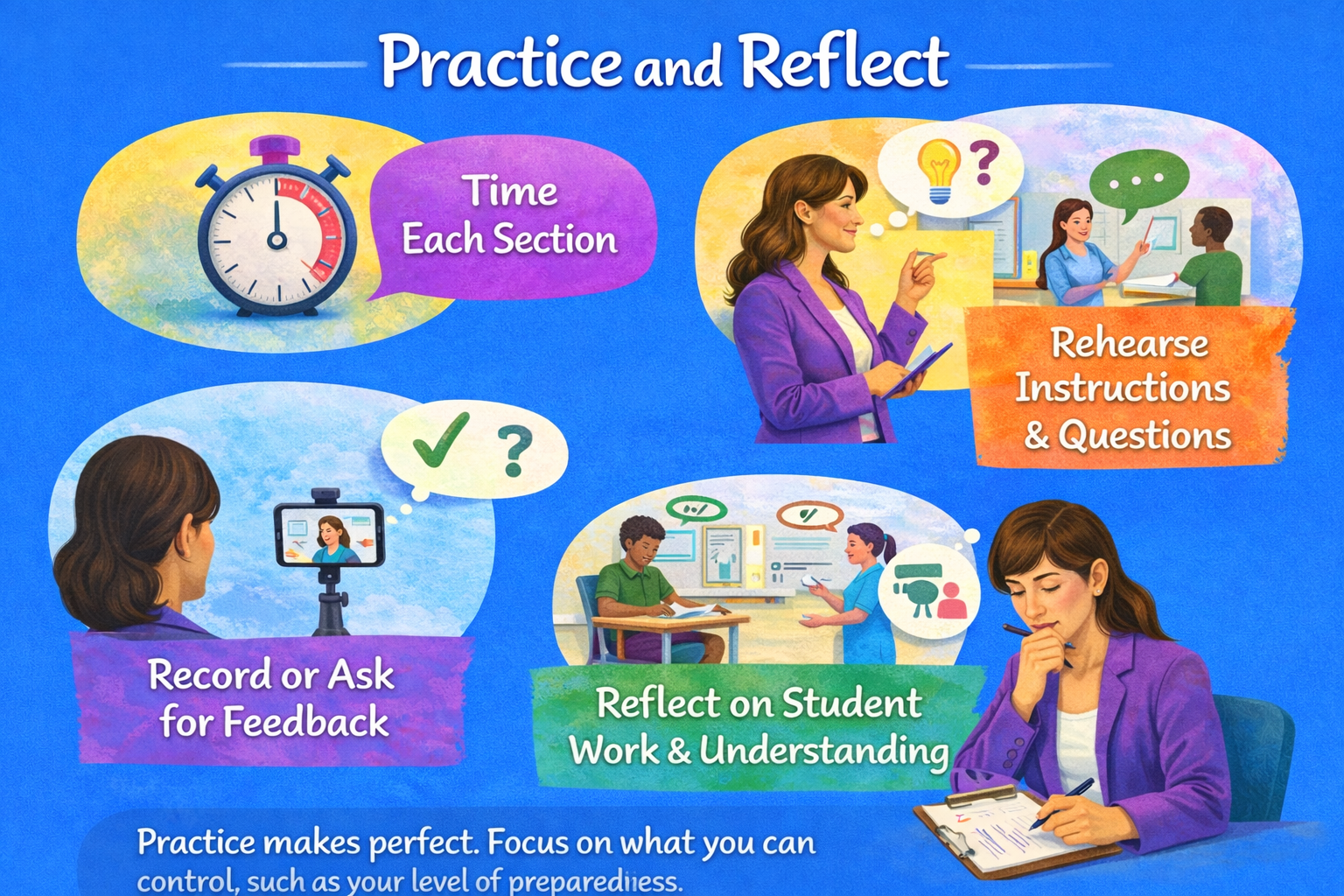
Before the day of the demo lesson:
Time each section
Rehearse instructions and questions
Record yourself or ask a friend to give feedback
Reflect: Are students doing the work? Are you assessing understanding?
Practice makes perfect. Focus on what you can control, such as your level of preparedness.
5. Prepare Thoroughly, and Have a Plan B
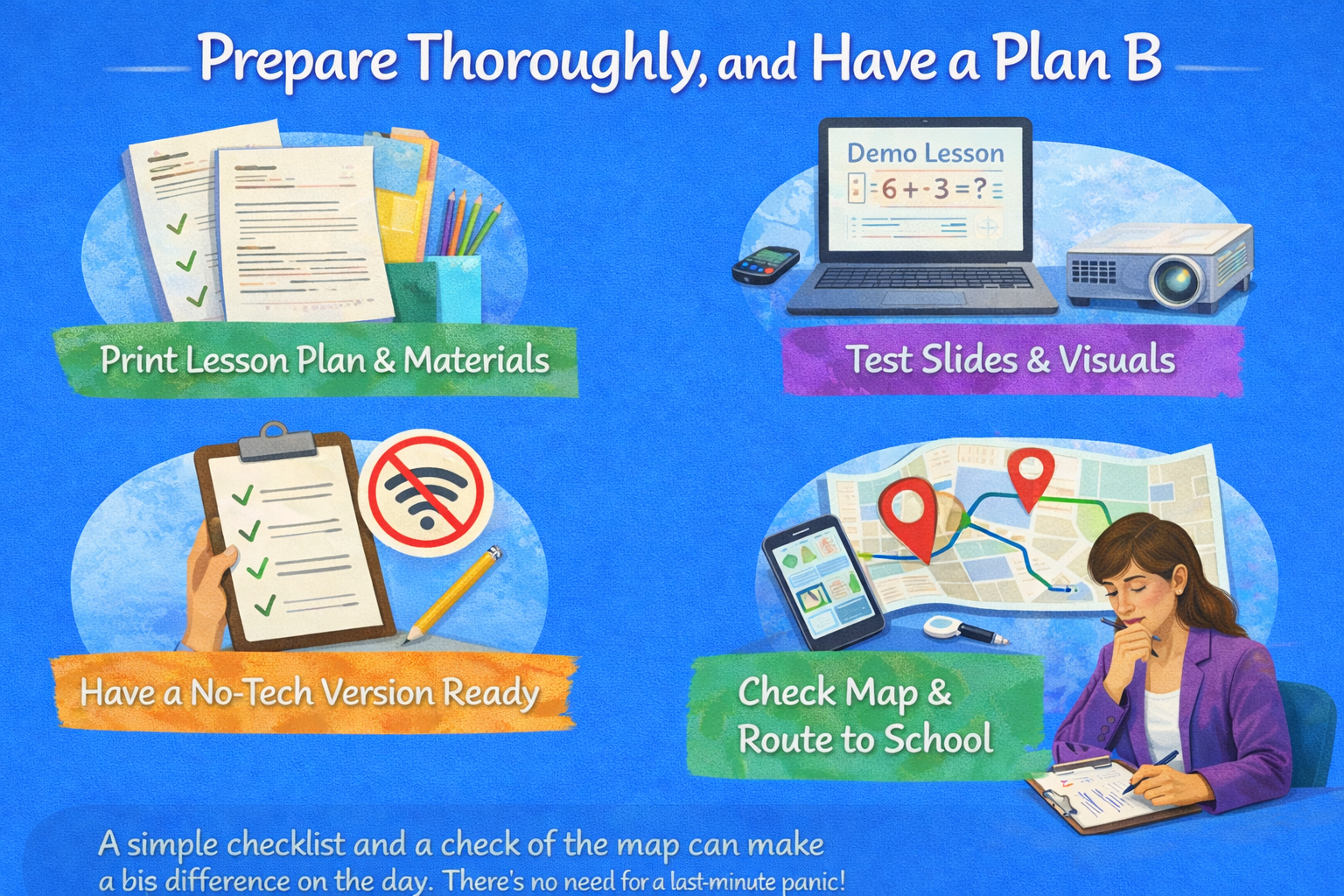
Bring everything you need and prepare for the unexpected:
Print your lesson plan and materials
Test any slides or visuals in advance
Have a no-tech version ready
Not been to the school before? Check travel routes and allow for any traffic and delays
A simple checklist and a check of the map can make a big difference on the day. There’s no need for a last-minute panic!
6. Demonstrate Your Teaching Strengths
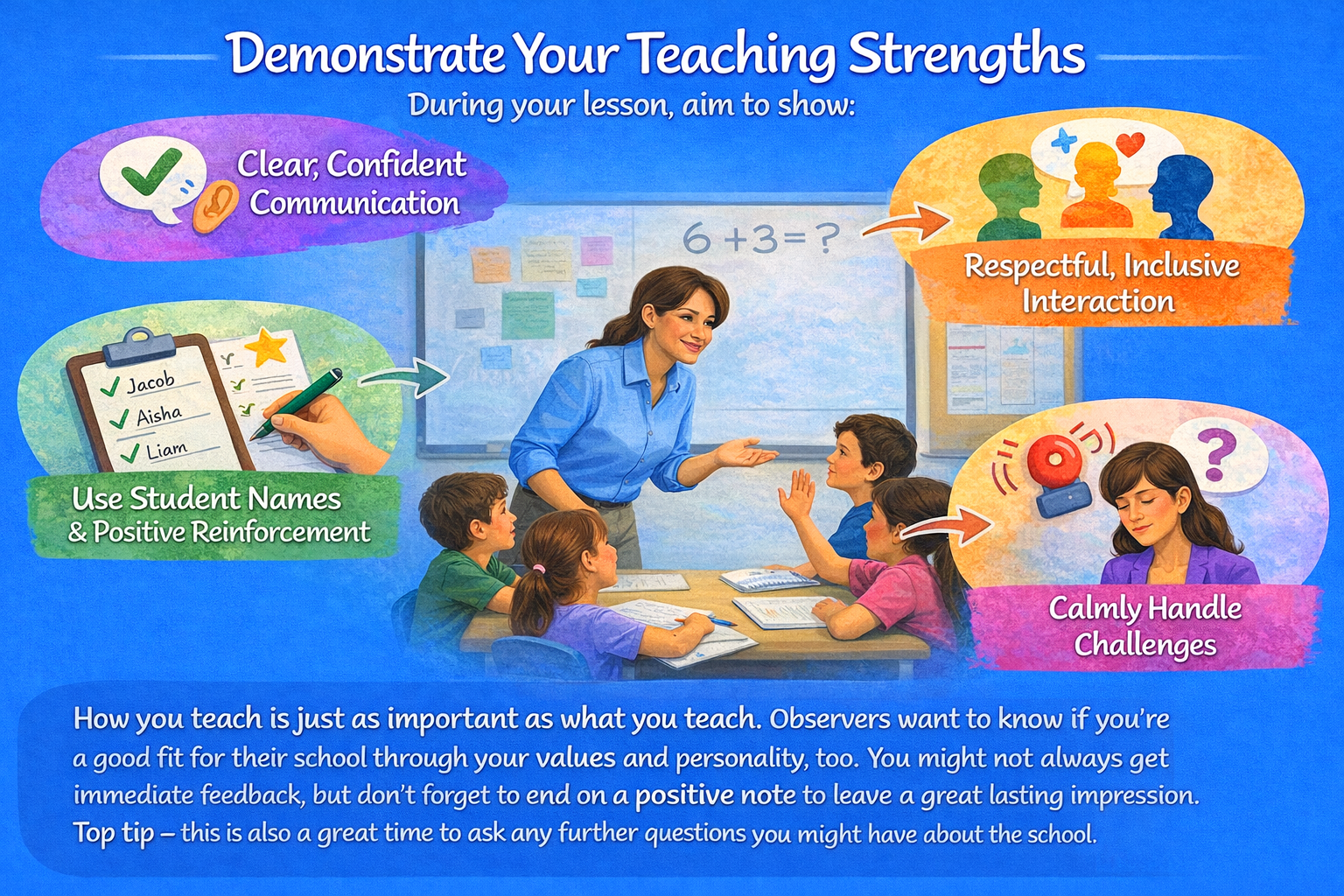
During your lesson, aim to show:
Clear, confident communication
Respectful, inclusive interaction
Use of student names and positive reinforcement
Calm responses to unexpected challenges
How you teach is just as important as what you teach. Observers want to know if you’re a good fit for their school through your values and personality, too. You might not always get immediate feedback, but don't forget to end on a positive note to leave a great lasting impression. Top tip - this is also a great time to ask any further questions you might have about the school.
Key Takeaways:
Focus on connection, not perfection. This can be with students, staff, and the school’s ethos
Prepare what you can, but be ready to adapt in the moment
Know what an observer is looking for - it’s not just subject knowledge you need to demonstrate
Trust in yourself. There’s a reason why you were invited for a demo!