
What’s It Like to Teach in Myanmar?
1. Salary and Benefits
Teacher salaries in Myanmar vary widely depending on the school type, city, and your experience. International schools in Yangon and Mandalay offer the highest pay, typically ranging from $1,500–$2,000 USD per month, with senior leadership or specialist roles paying more.
Most international schools provide benefits such as housing or a housing allowance, annual flights, medical insurance, and visa support. Larger schools may also offer tuition discounts for dependents and bonuses.
2. Living Costs
Myanmar offers an affordable lifestyle. International teachers generally find they can live comfortably and generally save part of their income.
Rent: $300–$600 per month for a furnished one-bedroom apartment in Yangon; much cheaper ($150–$300) in smaller towns.
Transportation: Local taxis or Grab rides within Yangon cost around $2–$5 per trip; motorbike taxis and buses are cheaper.
Eating out: Street food meals cost $1–$2, while dining at a mid-range restaurant might be $5–$10 per person.
Despite occasional import restrictions or inflation-related price changes, many teachers find the cost of living manageable and enjoy Myanmar’s relaxed pace of life.
3. Holidays
Teachers in Myanmar enjoy generous school holidays, including a long summer break, Christmas and New Year holidays, and public holidays such as Thingyan (Myanmar New Year/Water Festival) in April and Independence Day in January.
International schools will follow international academic calendars, which means teachers typically have similar vacation time to other regional teaching destinations.
4. Career Development Opportunities
Working in Myanmar can be a great way to expand your experience in a developing education market. International schools often follow British, American, or IB curricula, giving teachers the chance to work with international student groups and modern educational practices.
Many schools support ongoing professional development, offering workshops and access to online training. Teachers who thrive in dynamic, evolving environments will find Myanmar a rewarding place to grow both personally and professionally.
6. Safety and Suitability
Safety in Myanmar varies depending on location and current conditions. Major cities such as Yangon and Mandalay - where most international schools are based - are generally considered safe for international teachers, who often describe their daily life as peaceful and community-oriented. The people are friendly and welcoming, and expat teachers usually form close-knit networks.
That said, Myanmar has experienced political instability in recent years. It’s important for teachers to stay aware of local news, avoid demonstrations, and follow safety guidance from their schools and embassies. Reputable international schools monitor conditions closely and prioritise staff welfare.
Teaching in Myanmar suits educators who are:
Flexible and adaptable – things may not always run on a fixed schedule.
Culturally sensitive and patient – collaboration and respect are highly valued.
Adventurous and open-minded – life in Myanmar offers unique cultural experiences and new perspectives.
Passionate about making a difference – teachers have the chance to contribute meaningfully to a developing education system.
Professionally independent – those confident in classroom management and curriculum planning thrive here.
Teaching in Myanmar offers a blend of challenge, adventure, and opportunity. While the country continues to develop, the warmth of the people, the low cost of living, and the chance to make a real difference in education make it a truly special destination for international teachers.
If you’re looking for a teaching experience that’s off the beaten path that’s rich in culture, adventure and community, then Myanmar might just be your next great adventure!
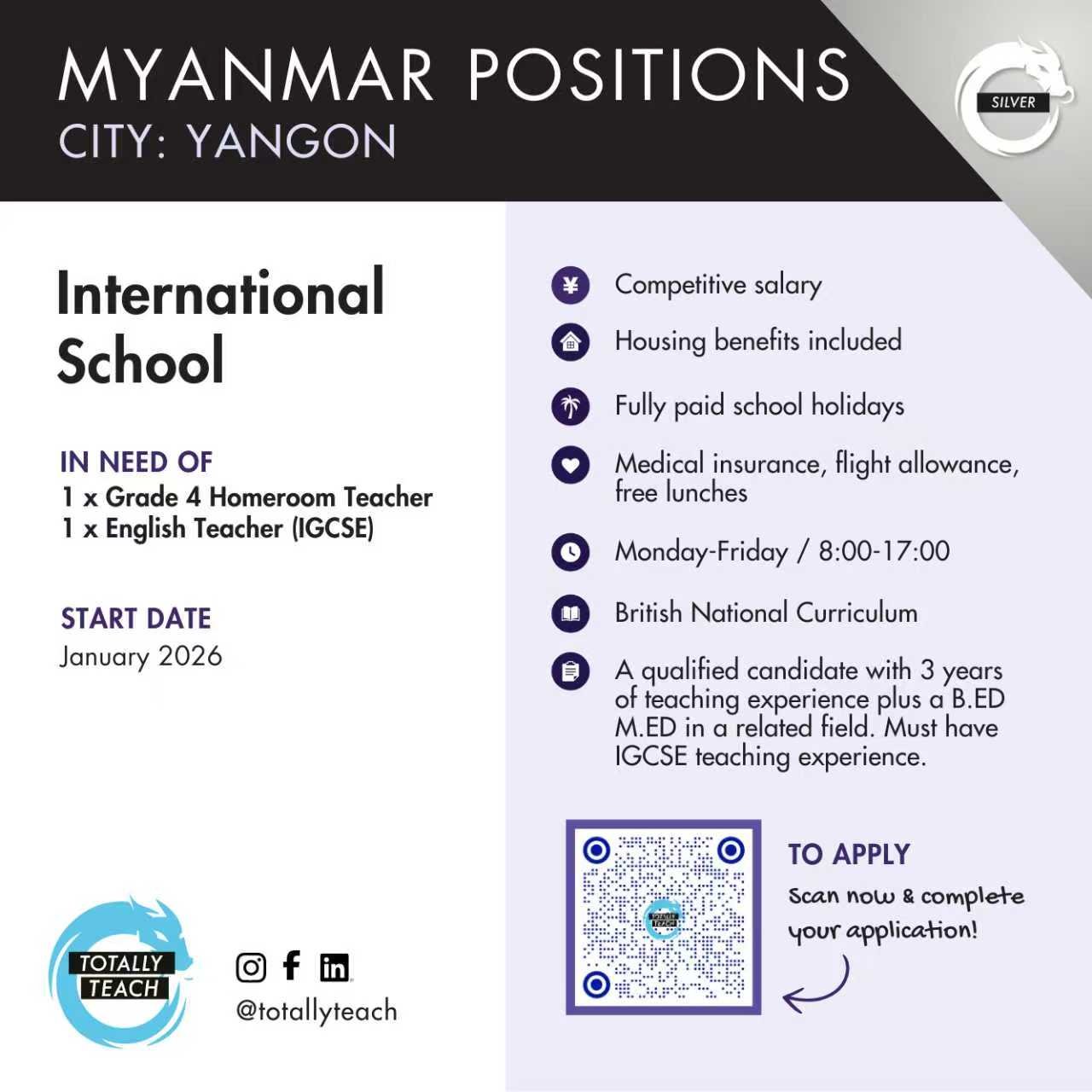
We have teaching opportunities in Yangon