

Why Being ‘Open on Location’ Is the Fastest Way to Get Hired
If you’re a qualified, international teacher, the world is your oyster! The demand for excellent educators is worldwide, with more opportunities out there than you can count.
When job hunting, some teachers may prioritise a specific location in their job search due to a family tie, work opportunity, or lifestyle preference.
While preferences are completely understandable, being overly fixed on location can significantly narrow your options and even slow down your hiring timeline.
We all know that the international teaching market has changed rapidly in recent years. Competition is fierce, meaning that schools in the most sought-after destinations are never short on teachers and talent.
If your goal is to secure a strong role quickly, here is why being open on location is one of the smartest and most strategic moves you can make in your job search.
1. More Locations = More Opportunities

When you widen your geographic scope, you instantly increase the number of schools you can
access. That means:
● More interviews
● More offers
● More negotiating power
● Faster hiring timelines
Many excellent schools sit outside the most talked-about cities. By limiting yourself to one
location, you may be unknowingly eliminating roles that are even better suited to your
experience and career goals.
Remember, being open-minded doesn’t mean accepting anything; it means allowing yourself to
explore opportunities you may not have previously considered.
2. Competitive Cities Slow the Process
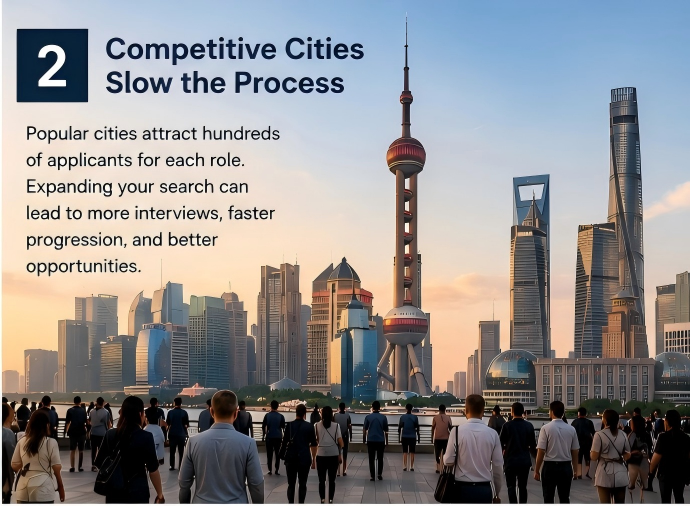
Cities like Shanghai are highly, highly competitive. Schools there often receive a high volume of applications for each position. Even strong candidates can find themselves competing against dozens - sometimes even hundreds! - of other qualified teachers. This can often result in far fewer interview invites.
If you’re aiming for faster career progression, the chance to take on greater responsibility, or leadership opportunities, expanding your search beyond the most competitive cities can help to accelerate that path. In less saturated markets, schools may:
Offer quicker progression
Provide broader responsibilities
Value your experience more prominently
Be more flexible with packages
The same role that attracts 150 applicants in Shanghai may attract 20 elsewhere. In other words, it really increases your chances of standing out and landing an interview!
3. The Right School Matters More Than the Right City
As much as we all want to find a perfect school, role, and package in a dream location, the reality is that usually there has to be some form of prioritising and compromising.
One of the most important comparisons in international education (in our opinion!) is this:
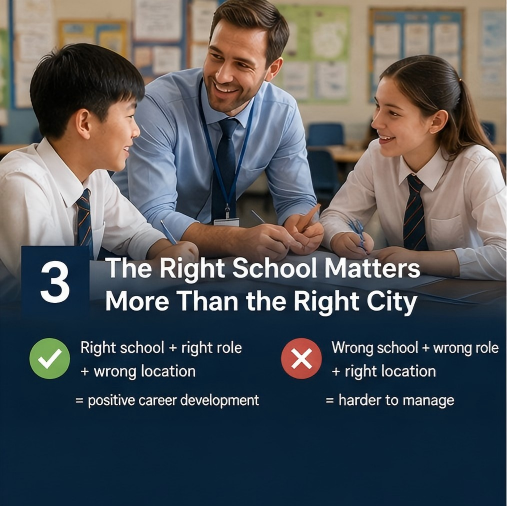
Right school + right role + wrong location = a manageable situation that contributes positively to career development
Wrong school + wrong role + right location = a harder-to-manage situation that won’t add much to your overall career development
If you secure the right role in a well-led school with strong leadership and a positive culture, adapting to a new location is usually achievable. You can settle in, build routines, and find community. You may even be surprised by how much you like it there!
However, being in the wrong role or at the wrong school - even in your dream city - can have a bigger impact on your professional growth and long-term career development.
4. Unexpected Locations Can Surprise You
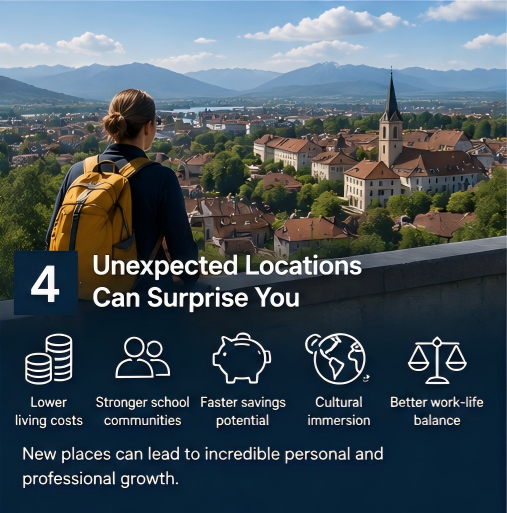
Many teachers who were initially hesitant about certain cities later describe them as some of their most rewarding experiences!
Smaller or less internationally famous cities can offer:
Lower living costs
Stronger school communities
Faster savings potential
More authentic cultural immersion
Greater work-life balance
When you approach your job search with curiosity rather than restriction, you create space for opportunities that may genuinely exceed your expectations.
5. Open-Minded = Strategic
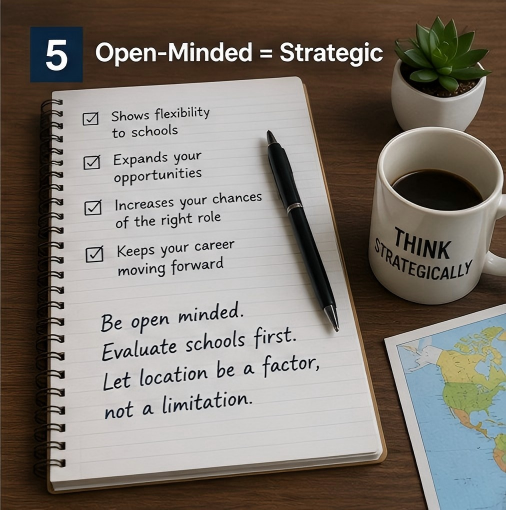
Being open on location isn’t about compromise; it’s about strategy.
It demonstrates flexibility to schools.
It expands your interview opportunities.
It increases your chances of securing the right role.
And most importantly, it keeps your career progression moving forward.
If you’re trying to land a new role and position yourself for growth, the fastest way forward is often simple:
Be open-minded to opportunities, evaluate schools first, and let location be a factor, not a limitation.